Quality Assurance of Community Pharmacy Services Across Jurisdictions: A Comparative Review of Governance Models and Structural Considerations for Hong Kong
LEE, Marco Tsuna; LAW, Kitty Kit Kia; LEE, Tommy Ka Hoa; CHEUNG, Gladys Daphnea; LIU, Sharon Yina; CHENG, Franco Wing Taka; WAN, Eric Yuk Faia,b; CHEN, Timothy Frankc; WONG, Ian Chi Keia*
aDepartment of Pharmacology and Pharmacy, Li Ka Shing Faculty of Medicine, The University of Hong Kong, Hong Kong SAR, China
bDepartment of Family Medicine and Primary Care, Li Ka Shing Faculty of Medicine, The University of Hong Kong, Hong Kong SAR, China
cSchool of Pharmacy, Faculty of Medicine and Health, The University of Sydney, Sydney, Australia
(*Corresponding author)
Primary Care, Over-the Counter & Health
HKPharm J Volume 33, NO 2 May-Aug-2026 (2026-09-20): P.59
 Abstract
 Full Article
 Author's Information
 List of Reference
 Content
 Share
ABSTRACT
As community pharmacy practice expands beyond traditional dispensing into preventive care, chronic disease management, screening services, and other pharmaceutical services, quality assurance (QA) systems must evolve to safeguard patient safety, professional accountability, and service effectiveness. This comparative review used a jurisdictional scan to map QA mechanisms for community pharmacy services in Australia, Canada, Macau, Chinese Mainland with Shenzhen as an illustrative example, Singapore, the United Kingdom, and the United States. The analysis compared regulatory foundations, accreditation approaches, inspection and audit practices, and incentive alignment strategies. Across jurisdictions, QA systems ranged from regulator-led compliance models to accreditation-based clinical governance arrangements and incentive-linked quality schemes. Statutory regulation remained the baseline mechanism, while more mature systems incorporated structured quality programmes, incident reporting, external assessment, and accreditation to support continuous quality improvement. The findings suggest that Hong Kong may benefit from a phased QA model that strengthens statutory compliance in the short term, introduces learning-oriented peer review in the medium term, and develops an independent, multi-stakeholder accreditation pathway in the long term as community pharmacy services expand within primary healthcare reform.
INTRODUCTION
Community pharmacy has undergone a sustained shift from product supply toward more patient-facing and clinical roles in many health systems. In addition to medication dispensing, pharmacists increasingly provide more clinical services such as medication management services, chronic disease management, minor ailment service and immunisation, in collaboration with doctors and other primary healthcare service providers.1 As responsibilities broaden, quality assurance (QA) should extend beyond premises and product controls to include service governance, workforce competency, workflow safety, documentation standards, incident reporting and learning systems, and routine monitoring of service performance.
In Hong Kong, primary healthcare reform has explicitly signalled a stronger role for community pharmacies. The Hong Kong Government’s Primary Healthcare Blueprint in 2022 recommended enhancing community pharmacy functions, and subsequent policy directions announced the development of a Community Drug Formulary and a Community Pharmacy Programme to support access to affordable primary healthcare medicines through a community network.2,3 In parallel, the Guidelines of Practice for Community Pharmacy situate standards-setting as an enabling condition for primary healthcare initiatives.4 These policy directions underscore the importance of considering what form of QA architecture can effectively support service expansion in community pharmacies while maintaining public confidence and operational feasibility. This article aims to map and compare QA mechanisms for community pharmacy services across selected jurisdictions, and synthesise governance design features that may inform Hong Kong as community pharmacy services expand within primary healthcare reform.
METHODS
A comparative review was conducted using a jurisdictional scan to map QA mechanisms for community pharmacy services. The jurisdictions were selected to reflect variation in governance arrangements and in the maturity of community pharmacy service development. The review included Australia, Canada, Macau, Chinese Mainland (with Shenzhen as an illustrative example), Singapore, the United Kingdom, and the United States. For each jurisdiction, the review described the responsible organisations, the baseline requirements for licensing and standards, the mechanisms used for ongoing monitoring and quality improvement, and any incentives or accreditation arrangements linked to quality. Information was drawn primarily from publicly available publications by regulators, government agencies, professional organisations, and accreditation bodies. Expert consultation within the author group was used to verify interpretations and ensure that the descriptions reflected operational realities. Formal risk-of-bias appraisal and quantitative synthesis were not performed because the purpose of the review was to map governance structures rather than to estimate intervention effects.
RESULTS
Overview of QA governance models across jurisdictions
Table 1 summarises the key QA mechanisms identified across the selected jurisdictions.5-23 Overall, the findings show that statutory regulation remains the common foundation of community pharmacy QA, but jurisdictions differ in the extent to which they incorporate accreditation, structured quality programmes, incident reporting, external assessment, and incentive-linked mechanisms.
Table 1. Comparative Overview of QA Mechanisms for Community Pharmacy Services Across Jurisdictions
|
Jurisdiction |
Primary Regulator(s) |
Accreditation or Quality Scheme |
Ongoing QA Mechanisms |
Incentive or Participation Linkage |
QA Governance Model |
|
Australia |
Pharmacy Board of Australia; state or territory health authorities; sector-led quality programmes |
QCPP, aligned with AS 85000 |
External assessment cycle; standards-based documentation review; quality improvement requirements within the programme |
Quality programme alignment used to support participation expectations under national agreements |
Accreditation embedded |
|
Canada (selected provinces) |
Provincial pharmacy regulators |
Mandatory QA components; NAPRA model standards as harmonising reference |
Practice review; self-assessment and reflective learning; competence assessment; continuing professional development portfolios; incident reporting and learning systems in some provinces |
Continuing competence requirements linked to licensure maintenance |
Professional QA embedded |
|
Macau |
Government medicines and pharmacy authority |
No formal service accreditation identified |
Regulator-led inspection and compliance oversight |
No incentive linkage identified |
Regulatory compliance |
|
Chinese Mainland (Shenzhen example) |
Medical security authority |
Contract-based performance grading |
Data-enabled monitoring; audits; on-site inspection |
Contract renewal and administrative consequences linked to performance grading |
Contractual compliance |
|
Singapore |
Health Sciences Authority; Singapore Pharmacy Council |
No national community pharmacy service accreditation identified; SS 644 provides standards for medication supply and delivery |
Regulatory audits and inspections; targeted standards for specific contexts including online supply and delivery arrangements |
Limited incentive linkage identified |
Regulatory compliance with targeted standards |
|
The United Kingdom (England) |
General Pharmaceutical Council; NHS England; NHS Business Services Authority |
PQS |
CPAF; contractual monitoring; audit and assurance activity |
Quality payments linked to achievement of defined PQS criteria |
Mixed compliance and incentive |
|
The United States |
State Boards of Pharmacy |
NABP Community Pharmacy Accreditation; URAC Pharmacy Services Accreditation |
Standards-based documentation review; site assessment; periodic reassessment cycles |
Accreditation commonly used to demonstrate eligibility for programme participation or contracting requirements |
Independent third-party accreditation |
Abbreviations: CPAF, Community Pharmacy Assurance Framework; NAPRA, National Association of Pharmacy Regulatory Authorities; NABP, National Association of Boards of Pharmacy; NHS, National Health Service; PQS, Pharmacy Quality Scheme; QCPP, Quality Care Pharmacy Program; URAC, Utilization Review Accreditation Commission
Compliance-based regulatory QA as the baseline model
Compliance-based regulatory oversight remains the foundational layer of community pharmacy quality assurance across the jurisdictions examined in this review. Across jurisdictions, statutory licensing of pharmacy premises and professional registration underpins baseline QA.1 Such regulation typically sets minimum requirements for premises, storage conditions, staffing, documentation, and professional conduct, and is enforced through inspection and sanctions when needed. In Singapore, the Health Sciences Authority regulates retail pharmacy licensing and conducts product quality surveillance and compliance monitoring across the supply chain, including retailers, to ensure the quality and safety of therapeutic products in the market.5 Professional governance is further supported through the Singapore Pharmacy Council’s pharmacist registration framework, competency standards, and assessment requirements for pharmacy practitioners.6 Singapore has also strengthened supply-and-delivery safeguards through national standards such as SS 644:2025, which provides requirements for medication supply and delivery arrangements, including collection points and institutional delivery contexts.7 In Macau, pharmacy governance is predominantly regulator-led, with inspection and enforcement functions embedded within governmental structures overseeing medicine regulation and pharmacy activities.8 In Chinese Mainland, particularly in Shenzhen, designated retail pharmacies participating in medical insurance are governed through a contractual and supervisory model. National rules specify oversight tools such as on-site inspection, spot checks, and intelligent monitoring, including data analytics, and provide mechanisms for handling non-compliance.9 Shenzhen additionally operationalises graded performance assessment, explicitly linking assessment outcomes to contract renewal and administrative consequences, thereby strengthening payer-led accountability.10 These compliance models are effective for establishing minimum safety and legality but may be less equipped on their own to cultivate continuous improvement culture or to standardise complex clinical services that require governance above baseline legal requirements.
Accreditation and structured quality programmes for expanded services
Several jurisdictions complement statutory regulation with accreditation or structured quality programmes that embed clinical governance requirements into routine practice. In England, the Community Pharmacy Contractual Framework provides a national structure within which a multi-layered quality assurance mechanism is embedded. The Community Pharmacy Assurance Framework (CPAF) is the primary tool for NHS England to monitor essential and advanced services and contractual compliance, while the Pharmacy Quality Scheme (PQS) is an incentive-based mechanism that rewards pharmacies for achieving higher quality criteria across clinical effectiveness, patient safety, and patient experience dimensions.11,12 This approach uses incentive alignment to encourage adoption of governance and safety requirements that may exceed minimum legal standards. In Australia, accreditation is a prominent pillar. The Quality Care Pharmacy Program (QCPP) is a national QA programme aligned with the Australian community pharmacy quality standards, including the AS 85000 series, supporting structured governance and regular assessment cycles.13,14 Quality accreditation is also referenced within national agreements governing community pharmacy programmes and is used to support clinical safety and quality expectations.15 In Canada, QA is commonly embedded within provincial pharmacy regulators’ continuing competence frameworks. Nationwide model standards of practice developed by National Association of Pharmacy Regulatory Authorities (NAPRA) provide a common framework that provinces can adopt or adapt, thereby supporting consistency across jurisdictions.16 At the provincial level, Ontario’s QA programme is directed primarily at pharmacy professionals rather than pharmacy organisations. It includes self-assessment, knowledge assessment, and learning portfolio maintenance and practice assessment. The practice assessment focuses on patient assessment, decision making, documentation, and communication and education. Participation in these components is linked to professional expectations and regulatory oversight.17,18 This differs from models in jurisdictions such as England and Australia, where QA mechanisms more explicitly incorporate organisational or service-level assessment of community pharmacy practice.
Incident reporting and continuous quality improvement mechanisms
In Canada, medication incident reporting in community pharmacy has increasingly been embedded within provincial quality improvement programmes and standards. Several provinces require pharmacies to participate in structured reporting systems that contribute anonymised data to Institute for Safe Medication Practices (ISMP) Canada’s National Incident Data Repository for Community Pharmacies, thereby supporting shared learning and medication safety improvement at a national level. British Columbia provides one example through Continuous Improvement, Reporting, Collaborating, and Learning (CIRCL), a provincial programme designed to facilitate incident reporting, shared learning, and continuous quality improvement in pharmacy practice.19 A consistent feature across these systems is that quality is framed not only as regulatory compliance but as clinical governance. This is supported by standardised processes, defined competency expectations, incident learning, and periodic assessment cycles that embed continuous improvement in routine community pharmacy practice.
Independent third-party accreditation and service-specific QA
Independent, third-party accreditation is a governance approach in which an external accrediting organisation develops service standards, evaluates implementation against those standards, and awards accreditation through periodic external evaluation and reassessment, in accordance with internationally recognised evaluation principles.20 It is intended to complement statutory regulation by addressing dimensions of service quality that are often under-specified in licensure requirements, including clinical governance arrangements, workforce competency, documentation practices, and Continuous Quality Improvement (CQI) mechanisms. By distinguishing minimum legal compliance from quality development, accreditation can enhance transparency and support a learning-oriented improvement culture while maintaining accountability. An illustrative example is the United States, where state boards of pharmacy regulate practice through licensure and enforcement of state pharmacy law, while independent organisations offer service-specific accreditation programmes.21-23 Accrediting bodies such as the Utilization Review Accreditation Commission (URAC) and the National Association of Boards of Pharmacy publish standards for programmes including community dispensing, drug therapy management, point-of-care testing, and vaccine administration.22,23 These programmes commonly apply structured assessment methods that include standards-based documentation review, site assessment, and reassessment cycles.22 Although accreditation is often voluntary, it is frequently used to demonstrate readiness for programme participation, contracting requirements, or other eligibility criteria, which can strengthen adoption of governance and quality systems in routine practice.
DISCUSSION
Principal Findings
This comparative review identified several key findings. First, statutory regulation, including pharmacy premises licensing, professional registration, inspection, and compliance monitoring, remains the baseline QA mechanism across all jurisdictions reviewed. Second, jurisdictions with more mature community pharmacy service models have introduced additional QA layers, such as accreditation, structured practice review, incident reporting systems, external assessment, and incentive-linked quality schemes. Third, as community pharmacy services expand beyond dispensing into clinical and preventive care, QA systems increasingly need to address service governance, workforce competency, documentation standards, patient safety, and continuous quality improvement. These findings suggest that Hong Kong’s future QA model should not rely solely on regulatory inspection, but should develop progressively towards a layered system that combines compliance, peer learning, and service accreditation.
Multi-Stakeholder Accreditation and Functional Differentiation as Governance Architecture
From a governance perspective, accreditation models are often strengthened when standards development and oversight incorporate multi-stakeholder input. This can be formalised through consortium-style arrangements that include professional, academic, service provider, and health system representatives. This can ensure service standards remain clinically credible, operationally feasible, and responsive to system priorities. Internationally, this principle can be seen in several forms. In the United Kingdom, QA for community pharmacy reflects a distributed governance arrangement involving the regulator [the General Pharmaceutical Council (GPhC)], the commissioners (NHS England and Integrated Care Boards), and Community Pharmacy England (CPE) as the representative body.24-27 In this model, the GPhC serves as the statutory regulator, establishing the "floor" of minimum safety and legal compliance. Simultaneously, NHS England develops clinical quality mechanisms, while CPE ensures these standards remain operationally realistic and achievable for contractors. In Australia, the community pharmacy quality standard that underpins QCPP accreditation was developed with stakeholder associations and is operationalised through recurring external assessment against a national standard.13,14 In the United States, independent accreditation programmes provide a further example, with service-specific accreditation standards and advisory structures that incorporate subject matter expertise in standards development and review.21-23 Such arrangements support timely updating of standards as service models evolve and help translate complex service activities into auditable governance requirements that complement licensure-based oversight.
A further recurring feature across more mature systems is functional differentiation. Statutory regulation establishes minimum safety and legal compliance, while accreditation and continuous quality improvement mechanisms drive quality development beyond baseline requirements.28 This separation can reduce tension between enforcement and learning functions. Where a single authority is expected to both enforce compliance and lead developmental improvement, psychological safety for reporting and learning may be undermined, particularly for incident reporting systems that depend on trust, standardised feedback loops, and non-punitive learning frameworks. This provides a practical reference point for considering how a future independent, multi-stakeholder accreditation pathway could be developed in Hong Kong as community pharmacy services expand in scope and public relevance.
Proposed phased QA pathway for Hong Kong
Hong Kong’s current QA framework for community pharmacies is predominantly regulatory and is anchored in statutory licensing and inspection requirements, setting the legal basis for pharmacy registration and the control of pharmaceutical products.29,30 In parallel, primary healthcare reform is expanding expectations for community pharmacy participation in publicly oriented clinical services.2-4 A key structural consideration is how to strengthen service governance without duplicating regulator functions or creating disproportionate administrative burden for pharmacies at different levels of readiness. A layered model combining statutory regulation, learning-oriented peer review, and progressive accreditation offers a neutral, internationally consistent approach (Figure 1). In this model, regulation continues to safeguard baseline legality and minimum safety requirements. Continuous quality improvement mechanisms support learning from incidents and standardising internal quality systems. Accreditation, potentially administered by an independent multi-stakeholder structure, provides service-specific governance and external validation that can be scaled as services mature. Incentive alignment can then be introduced to accelerate uptake and sustain improvement once standards and reporting maturity are established.
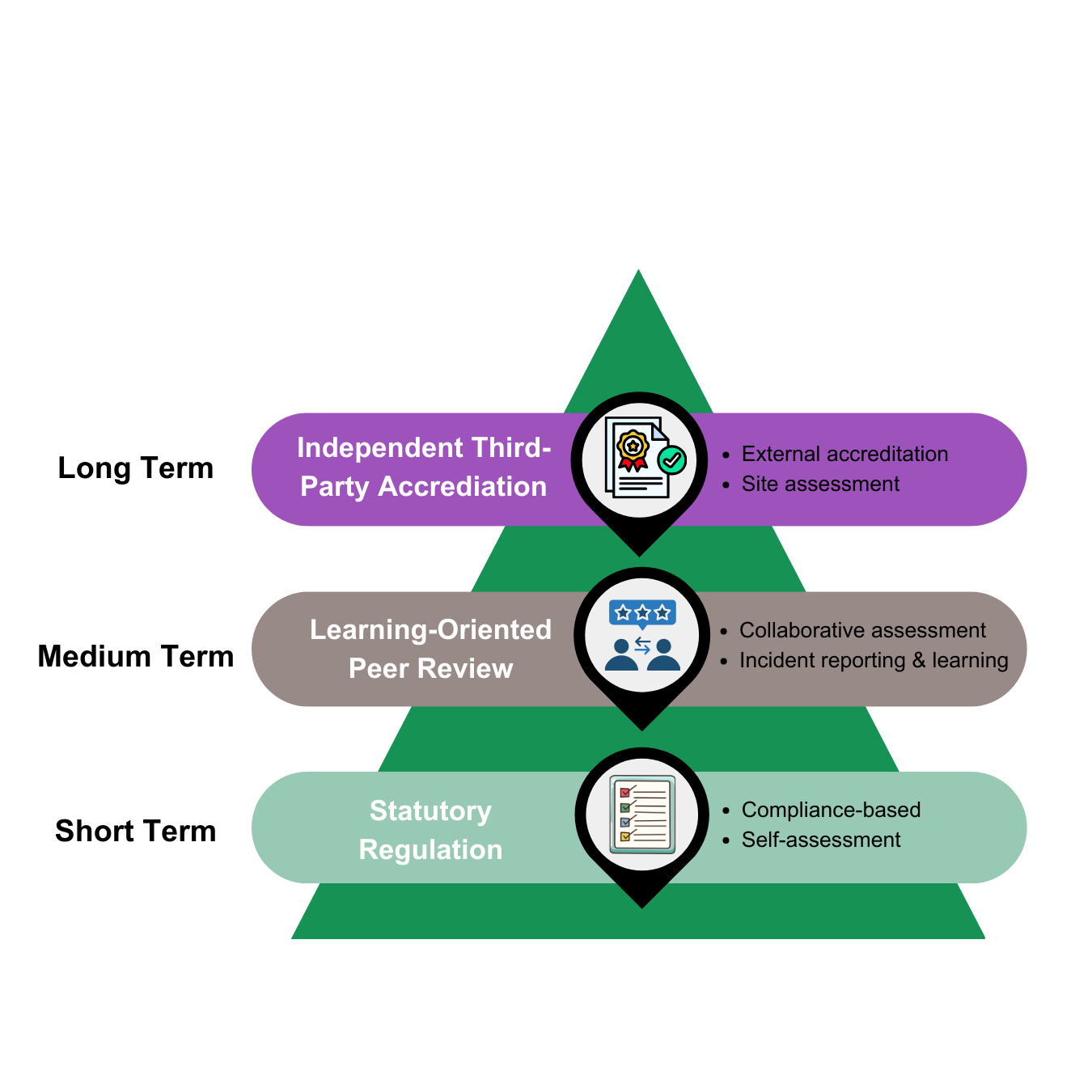
Figure 1. Layered governance model to strengthen QA for community pharmacy services in Hong Kong.
In the short term, Hong Kong could prioritise strengthening a consistent compliance baseline and supporting structured self-assessment for service readiness. This can include standardised self-assessment checklists aligned with the Guidelines of Practice for Community Pharmacy and any programme requirements under emerging primary healthcare initiatives, coupled with simple evidence templates and corrective action planning.4 Such an approach is practical, low-cost, and capacity-building, particularly for pharmacies that are at an early stage of service transformation.
In the medium term, Hong Kong could introduce peer review and collaborative assessment mechanisms to support learning-oriented quality improvement. Peer review models can be designed to provide formative feedback on workflows, documentation quality, incident learning practices, and service governance. Internationally, many continuing competence and practice review frameworks embed reflective learning and structured feedback as core mechanisms for improvement.17,18 This phase would also benefit from establishing shared incident reporting norms and feedback loops, which are central to medication safety improvement and continuous quality culture.19
In the long term, as community pharmacy services become a durable component of primary healthcare delivery, Hong Kong could consider formalising an accreditation pathway for service governance. International experience suggests that independent or consortium-based accreditation can complement statutory oversight by focusing on service standards, governance, and periodic reassessment, particularly for services such as vaccination and point-of-care testing that require explicit programme controls and documentation expectations.22 Accreditation could be implemented progressively, beginning with high-impact services and moving toward broader scope as data infrastructure and sector readiness mature. Alignment between accreditation status and participation in publicly funded programmes may then be considered as a policy lever, in keeping with approaches used in other jurisdictions that link quality schemes to programme participation or incentives.10,12,15
Strengths and Limitations
This review has several strengths, including its comparative focus across jurisdictions with different regulatory, accreditation, and incentive-linked QA models, and its direct relevance to Hong Kong’s evolving primary healthcare context. However, several limitations should be noted. This was not a systematic review, and the analysis relied mainly on publicly available documents and expert interpretation. The selected jurisdictions may not capture all possible QA approaches, and the review did not quantitatively assess the effectiveness or impact of different QA models on service quality, patient safety, or clinical outcomes.
CONCLUSION
Across jurisdictions, QA systems for community pharmacy increasingly extend beyond statutory inspection alone. Accreditation frameworks, structured quality programmes, incident learning systems, and incentive-linked quality schemes have emerged as complementary governance mechanisms as pharmacy services expand into broader clinical and preventive roles. In Hong Kong, where primary healthcare reform anticipates greater community pharmacy participation, a phased approach that begins with compliance strengthening and structured self-assessment in the short term, progresses to peer review and collaborative improvement in the medium term, and advances toward service accreditation supported by an independent multi-stakeholder structure in the long term provides a practical pathway to strengthen service quality and public trust and to support sustainable scale-up of community pharmacy services.
References
- International Pharmaceutical Federation; World Health Organization. Joint FIP/WHO guidelines on good pharmacy practice: standards for quality of pharmacy services. In: WHO Expert Committee on Specifications for Pharmaceutical Preparations: Forty-fifth report. WHO Technical Report Series, No. 961, Annex 8. World Health Organization; 2011. Accessed February 28, 2026.
- Health Bureau, Government of the Hong Kong Special Administrative Region. Primary Healthcare Blueprint. 2022. Accessed February 28, 2026.
- Government of the Hong Kong Special Administrative Region. The Chief Executive’s 2024 Policy Address. Published 2024. Accessed February 28, 2026.
- Health Bureau, Government of the Hong Kong Special Administrative Region. Guidelines of practice for community pharmacy. Primary Healthcare Commission; 2025. Accessed February 28, 2026.
- https://www.hsa.gov.sg/therapeutic-products/retail-pharmacy-licence/overviewHealth Sciences Authority, Singapore. Product quality surveillance for therapeutic products. Accessed February 28, 2026.
- https://www.spc.gov.sg/for-professionals/standards-exams/pre-registration-pharmacist-local-training-and-assessment/Singapore Pharmacy Council. Competency standards and examination/assessment. Accessed February 28, 2026.
- Singapore Standards Council. SS 644:2025 supply and delivery of medication standard. 2025. Accessed February 28, 2026.
- Macao Special Administrative Region. Administrative Regulation No. 35/2021: organisation and operation of the pharmaceutical administration authority. 2021. Accessed February 28, 2026.
- National Healthcare Security Administration, People’s Republic of China. Interim measures for designated management of retail pharmacies under medical insurance. 2021. Accessed February 28, 2026.
- Shenzhen Municipal Medical Security Administration. Performance assessment measures for designated retail medical institutions. 2024. Accessed February 28, 2026.
- NHS Business Services Authority. Community Pharmacy Assurance Framework (CPAF). NHSBSA. Accessed February 28, 2026.
- NHS Business Services Authority. Pharmacy Quality Scheme (PQS). NHSBSA. Accessed February 28, 2026.
- The Pharmacy Guild of Australia. Quality Care Pharmacy Program (QCPP). Accessed February 28, 2026.
- Standards Australia. AS 85000:2024 community pharmacy quality standard. Standards Australia; 2024.
- Australian Government Department of Health and Aged Care. Eighth Community Pharmacy Agreement (8CPA). 2024. Accessed February 28, 2026.
- National Association of Pharmacy Regulatory Authorities. Model standards of practice for pharmacists and pharmacy technicians in Canada. Published February 2022. Accessed February 28, 2026.
- Ontario College of Pharmacists. Quality assurance program overview. Accessed February 28, 2026.
- Ontario College of Pharmacists. Community pharmacist practice assessments. Accessed February 28, 2026.
- https://www.bcpharmacists.org/CIRCL-program-overviewInstitute for Safe Medication Practices Canada. Community pharmacy reporting programs. Accessed February 28, 2026.
- International Society for Quality in Health Care. ISQua Guidelines and Standards for External Evaluation Organisations. 5th ed. Accessed February 28, 2026.https://acreditacionensalud.org.co/wp-content/uploads/2020/07/ISQua-Guide-Standards-External-Evaluat-Organis-5th-Ed-v1.0.pdf
- National Association of Boards of Pharmacy. Model State Pharmacy Act and Model Rules. Accessed February 28, 2026.
- Utilization Review Accreditation Commission. Pharmacy services accreditation. Accessed February 28, 2026.
- National Association of Boards of Pharmacy. Community pharmacy accreditation. Accessed February 28, 2026.
- General Pharmaceutical Council. About us. Accessed February 28, 2026.
- Community Pharmacy England. Community Pharmacy Contractual Framework. Accessed February 28, 2026.
- Community Pharmacy England. Integrated Care Systems. Accessed February 28, 2026.
- Community Pharmacy England. Pharmacy representation. Accessed February 28, 2026.
- World Health Organization. Handbook for national quality policy and strategy: a practical approach for developing policy and strategy to improve quality of care. Published 2018. Accessed February 28, 2026.
- Department of Justice, Hong Kong Special Administrative Region. Pharmacy and Poisons Ordinance (Cap. 138). Hong Kong e-Legislation. Accessed February 28, 2026.
- Pharmacy and Poisons Board of Hong Kong. Code of Practice for Authorized Sellers of Poisons. Department of Health, Hong Kong Special Administrative Region. Accessed February 28, 2026.
