Is the Pharmacy Profession Ready for Artificial Intelligence by 2030? – Insights from the Hong Kong Pharmacy Conference 2026 Plenary Session
TONG, Jason a; WONG, Vincent b; WONG, Johnny b; FUNG, Crystal b; KWAN, William c; HO, Sue d; TSE, Hercules a; LI, Cherrie a
a Pharmacists Connect, PO Box no.: 196, Shatin Central Post Office
b The Society of Hospital Pharmacists of Hong Kong, 13/F, Kingsfield Centre, 18 Shell Street, North Point, Hong Kong
c Scribo Limited, Unit 1017, 10/F, Building 19W, No. 19 Science Park West Avenue, Hong Kong Science Park, Pak Shek Kok, N.T.
d Hong Kong Social Enterprise Pharma Shop 33, G/F Mei Lam Commercial Centre, Tai Wai
Pharmaceutical Techniques & Technology
HKPharm J Volume 33, NO 2 May-Aug-2026 (2026-09-20): P.73
 Abstract
 Full Article
 Author's Information
 List of Reference
 Content
 Share
ABSTRACT
The Hong Kong Pharmacy Conference 2026 featured a plenary session debate on whether the pharmacy profession in Hong Kong is ready for artificial intelligence (AI) by 2030. The "For" team, comprising Mr. Johnny Wong, Ms. Crystal Fung, and Mr. William Kwan, argued that existing infrastructure, professional evolution, governance frameworks, and empirical evidence position the profession well for AI integration. In contrast, the "Against" team, including Ms. Sue Ho, Mr. Hercules Tse, and Ms. Cherrie Li, contended that regulatory gaps, data security issues, ethical concerns, and immature applications render the profession unprepared. Adjudicated by renowned AI experts Professor Andy Chun and Professor Joshua Ho, the debate highlighted macro-level global regulations, local cybersecurity challenges, AI's role in clinical workflows, and the need for balanced adoption. This article summarizes the arguments, rebuttals, and implications, emphasizing the tension between technological optimism and cautious realism in Hong Kong's pharmacy landscape. It underscores the profession's need for proactive training, policy development, and ethical oversight to harness AI's potential without compromising patient safety. Ultimately, the discussion aims to foster continuous, evidence-based, and multidisciplinary dialogue among pharmacy professionals, policymakers, and technologists to enable more fruitful collaboration and informed decision-making as the profession advances toward 2030.
INTRODUCTION
In an era where artificial intelligence (AI) is rapidly transforming healthcare, the pharmacy profession stands at a crossroads. (1) The Hong Kong Pharmacy Conference, held on 31 January - 1 February 2026, brought together pharmacists from different sectors to discuss pressing issues in pharmaceutical care. A highlight was the plenary session debate titled "Is the Pharmacy Profession Ready for Artificial Intelligence by 2030?" This topic is particularly pertinent in Hong Kong, where the healthcare system grapples with an aging population, rising chronic disease burdens, and resource constraints. (2,3)
The "For" team advocated readiness based on institutional foundations, while the "Against" team highlighted unpreparedness due to risks and gaps. Adjudicators Professor Andy Chun (expert in AI applications) and Professor Joshua Ho (specialist in bioinformatics and health informatics) provided impartial oversight.
This article recaps the debate, elaborating on key arguments to provide a comprehensive overview for Hong Kong pharmacists. By drawing on the speakers' points, it aims to foster informed dialogue on AI adoption, aligning with the Hong Kong Government's 2025 Policy Address emphasis on AI as a core industry. (4)
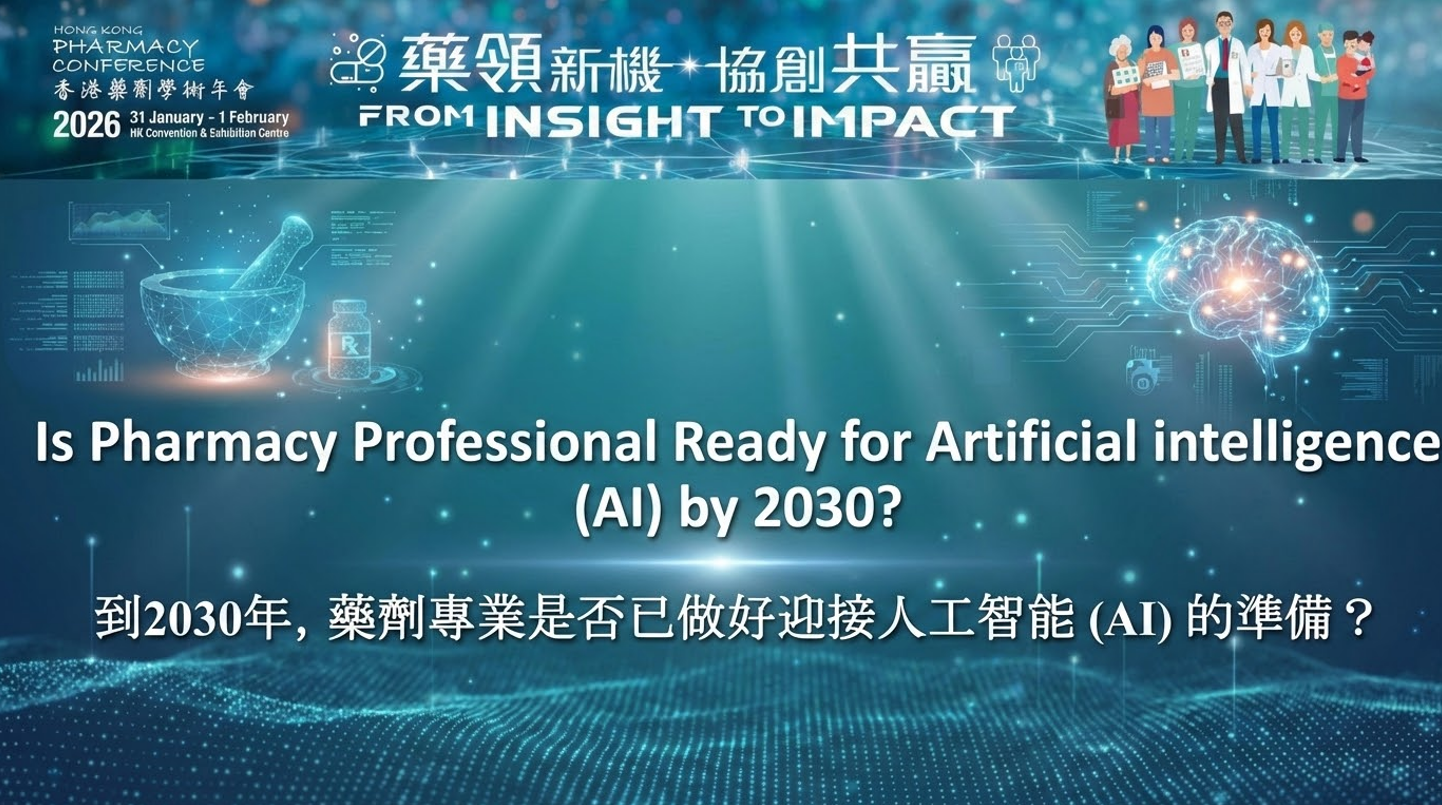
Photo 1. Title slide of the debate
EVENT OVERVIEW
The debate occurred during the conference's plenary session on 1 February, 2026, at the Hong Kong Convention and Exhibition Centre, attended by over 700 pharmacists, healthcare professionals, and stakeholders. Moderated by Mr. Vincent Wong, the format included opening statements, presentations, rebuttals, and a Q&A segment. Each team had 3 minutes per segment to present and counter arguments.
The "For" team consisted of:
- Mr. Johnny Wong, The Society of Hospital Pharmacists of Hong Kong
- Ms. Crystal Fung, The Society of Hospital Pharmacists of Hong Kong
- Mr. William Kwan, Scribo Limited
The "Against" team included:
- Ms. Sue Ho, Hong Kong Social Enterprise Pharma
- Mr. Hercules Tse, Pharmacists Connect
- Ms. Cherrie Li, Pharmacists Connect
The debate was adjudicated by two eminent AI experts: Professor Andy Chun, a renowned AI visionary and Professor of Practice in Digital Innovation and Emerging Technologies at the Hong Kong Polytechnic University, with over 30 years of experience in leading technological advancements across academia, industry, and consulting, including pioneering Hong Kong's first commercial AI system and developing solutions that enhance social services and economic development; and Professor Joshua Ho, Associate Professor at the University of Hong Kong's Li Ka Shing Faculty of Medicine, Assistant Dean for Innovation and Technology Transfer, Co-Director of the Master of Biomedical Innovation, and a specialist in bioinformatics, digital health, and medical AI, with over 155 publications in top journals such as Nature and Genome Biology, backed by extensive research in single-cell analytics and AI applications in medicine. They were invited to evaluate the debate teams based on the strength of evidence, logical coherence, and relevance to Hong Kong's context.
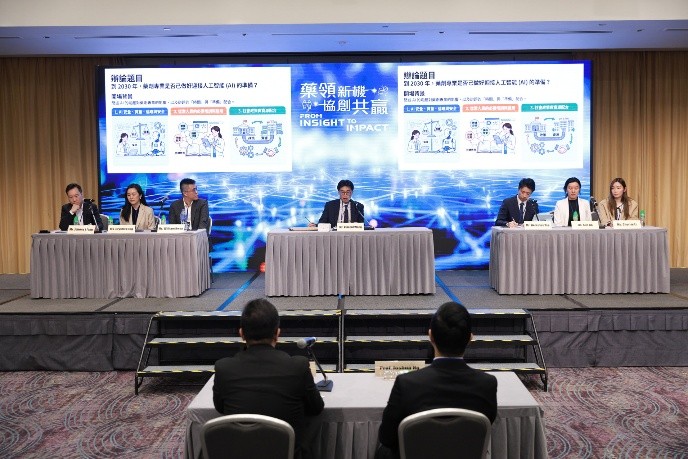
Photo 2. Debate panelists engaging in lively discussion during the plenary session at the Hong Kong Pharmacy Conference 2026.
“FOR” TEAM ARGUMENTS
The “For” team responded with measured optimism, contending that Hong Kong pharmacists can achieve functional AI readiness by 2030. Their argument unfolded through institutional, professional, regulatory, and empirical perspectives, positioning artificial intelligence not as a disruptive force but as a natural extension of existing healthcare systems.
Institutional and infrastructure readiness
Mr. Johnny Wong argued that Hong Kong’s healthcare infrastructure already provides a robust foundation for AI integration. The Hospital Authority (HA) has established a comprehensive digital ecosystem encompassing the Electronic Health Record Sharing System (eHRSS), Clinical Management System (CMS), Clinical Data Analysis and Reporting System (CDARS).
Pharmacy, inherently data-intensive, stands to benefit directly from these platforms. Applications such as AI-assisted prescription vetting, dosage optimization, drug interaction alerts, and inventory forecasting exemplify “high-value” use cases that supplement the pharmacist’s analytical capabilities. (1)
He further positioned AI as a workflow amplifier rather than an overhaul mechanism. He provided examples that in medication review, AI can pre-screen for high-risk drug combinations and renal dose adjustments; in patient safety, predictive algorithms can identify error-prone processes; in antimicrobial stewardship, real-time analytics enable timely intervention. (5)
Citing the 2025 introduction of the Community Drug Formulary and the 2026 Community Pharmacy Programme (CPP), Johnny described a developing “public–private AI loop” whereby interoperable data, shared via eHRSS, facilitates adherence monitoring and personalized dosing. For him, readiness does not imply perfection but pragmatic functionality—continuous improvement over the remaining four-year horizon to 2030. Hong Kong’s unified data environment, underpinned by “1+” drug registration mechanisms and Centre for the Medical Products Regulation (CMPR) oversight, provides fertile ground for scenario-based AI development.
Complementary roles of pharmacists and AI
Ms. Crystal Fung further elaborated on Johnny’s point that AI should not be seen as a replacement for pharmacists but rather as an augmentation of their professional scope. AI excels in pattern detection, computational accuracy, and large-scale data synthesis, whereas pharmacists contribute irreplaceable clinical judgment, contextual reasoning, ethical accountability, and empathetic patient communication. These domains are complementary: AI enhances efficiency and consistency, while pharmacists safeguard patient- centered care through discernment and human oversight. (6)
Over the past decade, Hong Kong’s pharmacy services have undergone a profound transition from dispensing-oriented operations toward clinical risk management and participation in multidisciplinary care. The profession’s focus has evolved from dispensing speed to patient-centricity of clinical decisions. (7) Crystal proposed that this trajectory positions pharmacists to take on pivotal roles in supervising AI applications—auditing training data, validating outputs, and ensuring ethical deployment.
Addressing concerns that AI might erode professional judgment, she argued that such outcomes are failures of governance, not inevitabilities of technology. Pharmacy’s well-established institutional safeguards and delineated scopes of accountability can prevent over-standardization and skill atrophy. She cautioned against the “policy fallacy” of assuming readiness requires unanimity: if a risk-conscious profession such as pharmacy cannot safely operationalize AI, then few others can.
Governance and risk-oriented culture
Mr. William Kwan emphasized that AI readiness is defined as much by governance structures and cultural preparedness as by technical capability. Pharmacy’s ingrained commitment to risk mitigation, error prevention, and continuous quality improvement through PDCA (Plan–Do–Check–Act) cycles aligns closely with AI’s ethical challenges—privacy, bias, transparency, and accountability.
Government support reinforces this alignment. The 2025 Policy Address positioned AI development as a national strategic priority, announcing HK$10 billion in funding for an AI Research Institute and establishing new policy frameworks under the Digital Policy Office and the Office of the Privacy Commissioner for Personal Data (PCPD). (4) William stressed that pharmacists need not master algorithmic coding any more than they must understand molecular synthesis to assess a drug’s efficacy. Instead, competency lies in evaluating AI’s clinical implications, outcomes, and biases.
He cited a 2025 Productivity Bureau study indicating that 90% of local enterprises had adopted some form of AI, accompanied by a surge in retraining initiatives. (8) Drawing on Zhuangzi’s reflections on living with continual change, skilfully adapting to particular circumstances, and ensuring that tools remain subordinate to human judgement, he reminded that professional evolution has always accompanied innovation. Continuous professional development (CPD) and cross-disciplinary collaboration, he argued, are sufficient to equip pharmacists with the literacy needed to question, calibrate, and ethically govern AI.
Empirical evidence and emerging trends
William also offered empirical evidence to substantiate AI’s value proposition. International and local studies suggest that AI integration reduces hospital dispensing errors by up to 75% and enhances adverse drug reaction detection by 65%. (9) Community settings have reported improved medication adherence of approximately 40% and a 55% reduction in missed refills. (9) Within the HA, data-driven initiatives via the Laboratory of Data Discovery for Health (D²4H) already support noncommunicable disease surveillance and therapeutic optimization.
Furthermore, cross-border collaborations under the Greater Bay Area framework and harmonized regulatory mechanisms—such as the “1+” strategy and CMPR oversight—accelerate AI validation cycles. Countering critiques of limited clinical evidence, William argued that meaningful proof accumulates incrementally, echoing the early stages of digital health adoption. Hong Kong’s unified health record architecture uniquely positions it to generate rapid, high-quality evidence and to assert regional leadership in AI-enabled pharmacy practice.
The “For” team’s position was clear: by 2030, Hong Kong’s pharmacy profession can achieve operational AI readiness through institutional foundations, complementary human–AI roles, governance maturity, and accumulating empirical support. Readiness, in this framing, is not technological perfection but controlled, evidence-informed progression—using digitized infrastructure as the launchpad for a responsible and adaptive AI-pharmacy ecosystem.
“AGAINST” TEAM ARGUMENTS
The "Against" team opened with a firm stance: By 2030, Hong Kong pharmacists are not ready for comprehensive AI use in workplaces. Ms. Sue Ho set the tone by clarifying that the discussion centered on generative AI, and emphasized the distinction between personal and professional AI application. She began her argument by engaging the audience with an interactive poll, revealing a striking contrast—while personal adoption of AI tools is widespread, workplace integration remains limited, underscoring the readiness gap central to the debate.
Global context and ethical framing
Sue began with a macro-level perspective, observing that global momentum on AI adoption is decelerating amid growing ethical and governance concerns. She cited South Korea’s AI Basic Act—enacted in January 2025 and effective from January 2026—as the world’s first comprehensive AI legislation. (10) The Act mandates labeling of generative AI outputs, explainability requirements for high-risk systems, and user risk notifications. Similarly, the European Union’s AI Act introduces stringent oversight of medical AI, reflecting rising apprehension that technological progress outpaces regulatory safeguards. (11) These measures, she argued, respond to documented harms such as algorithmic bias and diagnostic errors disproportionately affecting underrepresented groups.
In contrast, Hong Kong currently lacks comparable legal or ethical frameworks. (12) This absence, Sue contended, reflects systemic unpreparedness rather than innovation restraint. The current global “pause” represents a measured response to ethical imperatives—particularly the potential for AI systems trained on biased data to exacerbate health inequities. For pharmacists, this risk extends beyond fairness to the integrity of clinical decisions; without appropriate safeguards, AI could inadvertently prioritize cost efficiency over patient-centered care, especially within Hong Kong’s resource-limited public healthcare setting.
Local readiness and cybersecurity risks
Turning to local challenges, Sue identified cybersecurity vulnerabilities as a fundamental barrier. Government data from 2025 reported 15,877 network security incidents, a 27% year-on-year increase, with phishing attacks comprising 57% of cases. (13) Vulnerable systems expanded by over threefold. Against this backdrop, delegating sensitive patient data, prescriptions, and clinical records to AI-driven cloud platforms would be, she argued, premature and potentially hazardous. The reliance of most AI models on cloud-based infrastructures also amplifies data breach risks, especially amid regional geopolitical uncertainties. For healthcare institutions, such lapses could invite Health Insurance Portability and Accountability Act (HIPAA)-equivalent violations, undermining both patient trust and institutional credibility. Sue further elaborated that these are not merely technical flaws but symptoms of structural fragility that currently render widespread AI adoption unsafe.
Practical and regulatory limitations
At the operational level, Sue questioned AI’s immediate applicability across pharmacy sectors—whether community, hospital, or industrial. Hong Kong’s limited innovation ecosystem, small market scale, and short-term funding culture constrain the development of locally tailored AI solutions, often making manual workflows more economical and contextually appropriate. Historical precedents of failed health technology implementations demonstrate how hype can eclipse efficacy, particularly where local linguistic and cultural diversity complicates algorithmic interpretation.
Even beyond technical readiness, Sue highlighted unresolved legal and governance gaps. AI systems influencing clinical decisions may qualify as medical devices, requiring formal validation and post-market surveillance. Yet Hong Kong lacks a distinct regulatory framework to define these responsibilities, exposing practitioners to legal ambiguity. Cases overseas illustrate the potential for liability disputes following AI-enabled errors, a deterrent in risk-averse professions such as pharmacy.
Infrastructure and sustainability concerns
Sue also drew attention to logistical constraints often overlooked in policy discussions. Privacy-preserving AI usually necessitates on-premise data hosting, which demands costly hardware investments, high energy consumption, and advanced processing units—resources already strained by global semiconductor supply chain disruptions.
Ethical and professional implications
Mr. Hercules Tse reinforced these arguments with a technical perspective. Citing the World Health Organization’s 2024 Guidance on Ethics and Governance of Artificial Intelligence for Health, he underscored that “a model is only as robust as the data that train it.” (14) Systemic underrepresentation of vulnerable populations amplifies bias, which is more difficult to detect and correct in AI systems than in conventional clinical processes. Within pharmacy practice, such bias could manifest in drug interaction alerts or dosing recommendations that fail to account for local population diversities.
He further referenced a 2026 Stanford–Microsoft study evaluating large language models (LLMs) across medical tasks: while LLMs demonstrated strong reasoning capabilities, they exhibited inconsistent performance across clinical contexts, struggled with quantitative tasks, and incurred prohibitive computational costs. (15) Invoking the “no free lunch theorem,” Hercules argued that no single model can perform optimally across all domains; rigorous local validation in Hong Kong’s linguistic and clinical settings remains essential.
Reframing AI readiness
Ms. Cherrie Li concluded the argument by clarifying that skepticism toward immediate AI adoption does not equate to opposition to innovation. Instead, she urged reframing the discourse from “Can we use AI?” to “How can we use AI safely and responsibly?”. She highlighted persistent vulnerabilities including data leakage from unauthorized uploads and reactive cybersecurity practices—evidenced by the rise in data loss prevention (DLP) system adoption from 31% to 54% within a year. The WHO continues to stress that legal and governance infrastructure must precede large-scale implementation. (16) To that end, Cherrie called for design thinking approaches, institutional training, and interdisciplinary collaboration to build competency before deployment.
The “Against” team thus presented a tempered, evidence-based argument: familiarity with AI in daily life does not imply institutional readiness for its clinical and operational integration. Without mature governance, secure infrastructure, and ethical frameworks, the profession risks adopting technology faster than it can manage its consequences. As of now, AI in pharmacy should evolve through structured adaptation rather than premature integration.
ADJUDICATORS' COMMENTS
Following the presentations and rebuttals, adjudicators offered insightful commentary, blending agreement with forward-looking perspectives. They emphasized the imperative for proactive change, noting that maintaining the status quo would result in stagnation: "If we adhere to the status quo, nothing will fundamentally change in the pharmacy profession's approach to AI integration." They concurred with elements of the "Against" team's arguments, particularly Sue’s observations on Hong Kong's relatively small market size. Professor Chun highlighted that AI models must be economically viable and cost-effective to achieve widespread adoption. They further elaborated that public and private sector models may diverge significantly due to differing patient demographics—public systems often serve a broader, more diverse population with varying socioeconomic backgrounds, while private models might cater to more affluent or specialized groups, necessitating tailored approaches to ensure equity and efficacy.
The adjudicators also pointed to regional advantages that could accelerate progress. They noted China's robust ecosystem of open-source AI resources, which substantially lowers barriers to development by providing accessible tools, frameworks, and datasets for customization in healthcare applications. This proximity to mainland innovations positions Hong Kong favorably for collaborative advancements. Moreover, Professor Ho praised the advanced state of AI research in Hong Kong's universities, describing the region as "a fortunate hub" where five out of its eight universities funded by the University Grants Committee rank among the global top 50 in AI research output and impact, according to recent international benchmarks. This academic strength, they argued, could drive localized AI solutions for pharmacy, fostering interdisciplinary partnerships between academia, industry, and healthcare providers to bridge current gaps.
Their comments underscored a balanced view: While acknowledging risks and market constraints, they advocated leveraging Hong Kong's academic prowess and regional ties to propel the profession toward readiness by 2030, provided there is concerted effort beyond complacency.
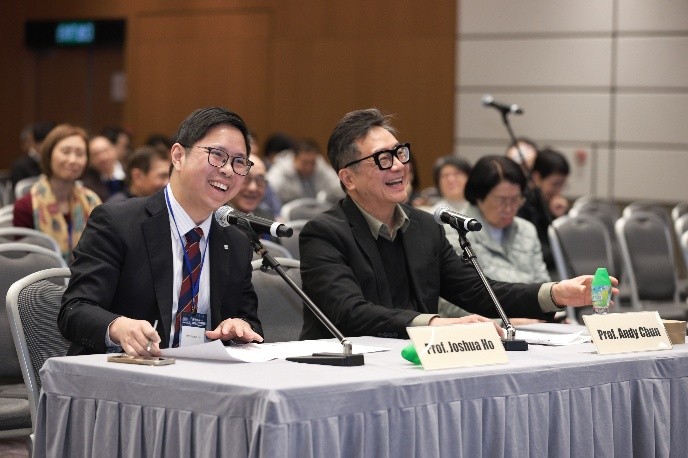
Photo 3. Adjudicators Professor Andy Chun and Professor Joshua Ho providing feedback on AI governance.
DISCUSSION
The debate illuminated a nuanced divide. The "Against" team's caution resonates amid global AI slowdowns and local cybersecurity woes, where risks like biases and breaches could undermine trust. Their emphasis on ethical guidelines and studies underscores that AI's "black box" and data dependencies demand scrutiny, especially in Hong Kong’s diverse population, which varies in age, ethnicity, language, socioeconomic circumstances, and levels of health and digital literacy. Furthermore, biases in AI could disproportionately affect ethnic minorities or elderly patients, common in pharmacy consultations, potentially widening health disparities. Labor fears are valid; while laws mandate pharmacists, AI might reduce entry-level roles, necessitating upskilling.
Conversely, the "For" team's optimism leverages Hong Kong's strengths: HA's digitization and policies like community pharmacy program could create data-rich environments for AI. Their "co-pilot" metaphor aligns with pharmacy's evolution, where AI augments clinical judgment. Empirical data from pilots suggests tangible benefits, like error reduction, crucial in high-volume settings. Rebuttals effectively frame risks as manageable via governance, not barriers.
The adjudicators' insights add depth, reinforcing that economic viability and demographic considerations are pivotal. By highlighting open-source resources from China and Hong Kong's top-tier AI research universities, they suggest pathways for overcoming market limitations—such as through cost-shared academic-industry collaborations or adapting open-source models to local needs. This could differentiate public models of focusing on scalability for mass populations from private ones of emphasizing personalization for niche demographics, ensuring AI's cost-effectiveness. Their call against status quo inertia aligns with the debate's overarching theme: From Insight to Impact.
Implications include urgent needs for AI-specific CPD, regulatory clarity (e.g., adapting Medical Device Ordinance), and small-scale pilots. Multistakeholder collaboration—government, HA, pharmaceutical societies, and universities—could bridge divides, ensuring AI enhances pharmaceutical care equitably. For instance, leveraging the top-ranked universities' expertise could lead to bespoke AI tools for Cantonese-language processing or region-specific drug interaction databases, addressing multilingual challenges raised by the "Against" team.
CONCLUSION
The 2026 debate underscores that AI readiness is multifaceted, balancing innovation with safeguards. It highlights that realizing AI’s benefits in pharmacy will depend as much on governance, ethics, and workforce capability as on technology itself. While challenges persist, Hong Kong's infrastructure, professional ethos, and academic strengths—bolstered by regional open-source access—position it favorably by 2030. Pharmacists must engage proactively: advocate for policies, pursue training, and pilot AI ethically, with clear human oversight and accountability. Building on the momentum of this plenary, the profession should actively foster continuous, evidence-based, and multidisciplinary dialogue among practitioners, policymakers, educators, patients, and technologists, so that AI adoption in Hong Kong pharmacy is not only innovative and efficient but also trustworthy, equitable, and sustainable.
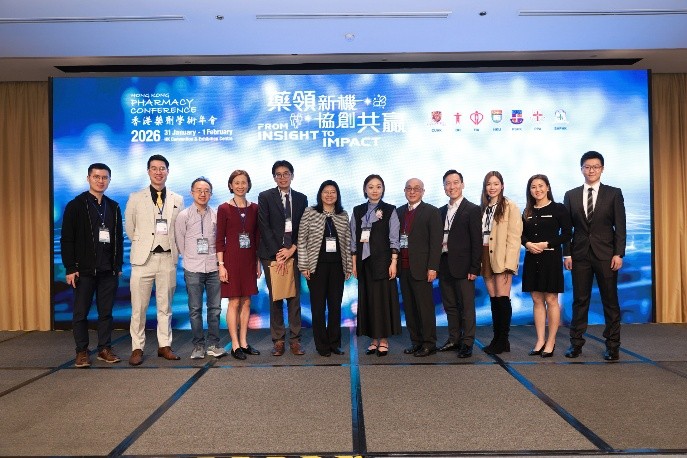
Photo 4. Organizing Committee of HKPC2026
Acknowledgment
Thanks to the Hong Kong Pharmacy Conference organizers, adjudicators and panelists for facilitating this vital discussion.
Disclaimer
The views and opinions expressed in this article are those of the individual speakers and do not necessarily reflect the official positions, policies, or perspectives of their respective work organizations, institutions, or affiliated bodies.
REFERENCES
- Chalasani SH, Syed J, Ramesh M, Patil V, Pramod Kumar TM. Artificial intelligence in the field of pharmacy practice: A literature review. Explor Res Clin Soc Pharm. 2023 Oct 21;12:100346. doi: 10.1016/j.rcsop.2023.100346.
- Chen C. Analysis on Hong Kong’s current medical service under the aging population. Open J Soc Sci. 2017;5(4):294‑302.
- Hospital Authority. Strategic Service Framework for Chronic Disease Management. Hong Kong; 2024.
- The Government of the Hong Kong Special Administrative Region. The 2025 Policy Address. Hong Kong; 2025.
- De Micco F, Di Palma G, Ferorelli D, et al. Artificial intelligence in healthcare: transforming patient safety with intelligent systems—A systematic review. Front Med (Lausanne). 2025;12:1537648.
- Bu F, Sun H, Li L, Tang F, Zhang X, Yan J, et al. Artificial intelligence‑based internet hospital pharmacy services in China: Perspective based on a case study. Front Pharmacol. 2022;13:1049583.
- Lee CP. Health care system and pharmacy practice in Hong Kong. Can J Hosp Pharm. 2018;71(2):140-148
- Hong Kong Productivity Council. HKPC announces "AI Readiness in the Workplace Survey 2025" results: over 80% of enterprises ready to adopt AI, while "data privacy" and "technical expertise" remain key challenges [Internet]. Hong Kong: HKPC; 2025 Feb 11 [cited 2026 Apr 8]. Available from: https://www.hkpc.org/en/about-us/media-centre/press-releases/2025/ai-readiness-in-workplace-survey-2025
- Simpson MD, Qasim HS. Clinical and operational applications of artificial intelligence and machine learning in pharmacy: a narrative review of real-world applications. Pharmacy (Basel). 2025 Mar 7;13(2):41. doi:10.3390/pharmacy13020041.
- National Artificial Intelligence Committee. AI Basic Act [Internet]. Seoul: Ministry of Science and ICT; [cited 2026 Apr 8]. Available from: https://aibasicact.kr/
- European Commission. Artificial intelligence in healthcare [Internet]. Brussels: European Commission; [updated 2024; cited 2026 Apr 8]. Available from: https://health.ec.europa.eu/ehealth-digital-health-and-care/artificial-intelligence-healthcare_en
- White & Case. AI watch: global regulatory tracker - Hong Kong [Internet]. New York: White & Case LLP; 2024 [updated 2024 Nov 12; cited 2026 Apr 8]. Available from: https://www.whitecase.com/insight-our-thinking/ai-watch-global-regulatory-tracker-hong-kong
- Hong Kong Computer Emergency Response Team Coordination Centre. HKCERT releases Hong Kong cybersecurity outlook 2026: security incidents hit record high with 27% annual increase; AI-related attacks and supply chain risks emerge as top concerns [Internet]. Hong Kong: HKCERT; 2026 Feb 10 [cited 2026 Apr 8]. Available from: https://www.hkcert.org/press-centre/hkcert-releases-hong-kong-cybersecurity-outlook-2026-security-incidents-hit-record-high-with-27-annual-increase-ai-related-attacks-and-supply-chain-risks-emerge-as-top-concerns-nearly-30-of-enterprises-lack-dedicated-cybersecurity-personnel
- World Health Organization. Ethics and governance of artificial intelligence for health: guidance on large multi-modal models [Internet]. Geneva: World Health Organization; 2024 Jan 18 [cited 2026 Apr 8]. Available from: https://www.who.int/publications/i/item/9789240084759
- Liang P, Bommasani R, Lee T, Liao K, Srivastava A. Holistic evaluation of large language models for medical applications [Internet]. Stanford (CA): Stanford Institute for Human-Centered AI (HAI); 2024 Jun 13 [cited 2026 Apr 8]. Available from: https://hai.stanford.edu/news/holistic-evaluation-of-large-language-models-for-medical-applications
- Gioulekas F, Stamatiadis E, Tzikas A, Gounaris K, Georgiadou A, Michalitsi-Psarrou A, Doukas G, Kontoulis M, Nikoloudakis Y, Marin S, Cabecinha R, Ntanos C. A cybersecurity culture survey targeting healthcare critical infrastructures. Healthcare (Basel). 2022 Feb 9;10(2):327. doi:10.3390/healthcare10020327.
Author’s background
TONG Jason is the President and co-founder of Pharmacists Connect. For enquiries, please contact him through the email address: contact.pharmacistsconnect@gmail.com
WONG Vincent is a member at The Society of Hospital Pharmacists of Hong Kong. For enquiries, please contact him through the email address: info@shphk.org.hk
WONG Johnny is the Vice President at The Society of Hospital Pharmacists of Hong Kong. For enquiries, please contact him through the email address: info@shphk.org.hk
FUNG Crystal is a general committee member at The Society of Hospital Pharmacists of Hong Kong. For enquiries, please contact her through the email address: info@shphk.org.hk
KWAN William is the technical director of Scribo Limited. For enquiries, please contact him through the email address: kwanhimshek@gmail.com
HO Sue is the cofounder of Hong Kong Social Enterprise Pharma. For enquiries, please contact her through the email address: susan.ho@hksep.org
TSE Hercules is a committee member of Pharmacists Connect. For enquiries, please contact him through the email address: contact.pharmacistsconnect@gmail.com
LI Cherrie is a member of Pharmacists Connect. For enquiries, please contact her through the email address: contact.pharmacistsconnect@gmail.com
